
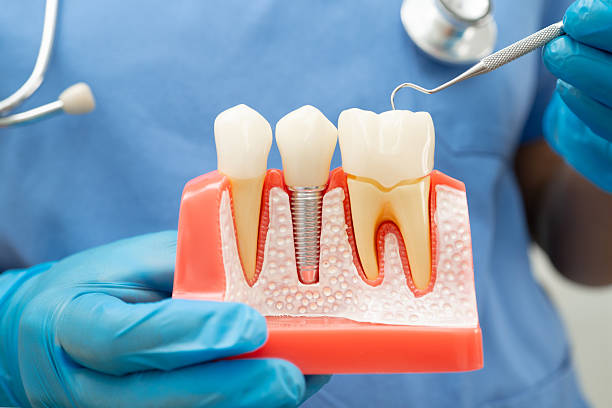
A dental implant needs enough healthy jawbone around it to remain stable and integrate with the surrounding tissue. When the available bone is too thin, too short, or otherwise insufficient for predictable implant placement, a bone graft may be used to rebuild or preserve the area. Not every patient needs bone grafting before receiving dental implants in Modesto.
At Dental Design Studio, Dr. Rimmie Pandher uses a clinical examination and diagnostic imaging to evaluate the jawbone and determine whether an implant can be placed directly, grafting is needed first, or both procedures may be performed together.
Why Do Dental Imants Need Healthy Jawbone?
A dental implant is placed within the jawbone, where it relies on the surrounding bone for initial stability and long-term support. As the area heals, the implant surface integrates with the bone through a process called osseointegration. This connection allows the implant to support a crown, bridge, or implant-supported denture.
Several characteristics of the jawbone affect treatment planning:
- Height: There must be sufficient vertical bone to accommodate the planned implant safely.
- Width: The bone must be wide enough to surround and support the implant.
- Density and quality: The character of the bone can influence implant stability and healing.
- Surrounding support: Healthy bone must remain around the implant after it is positioned.
If one or more of these conditions are not adequate, bone grafting may help develop the site before or during dental implant placement. Grafting can improve the foundation available for treatment, but it does not guarantee implant success. Healing, oral hygiene, general health, and other clinical factors also affect the outcome.
What Happens When There Is Not Enough Bone for an Implant?
Insufficient bone means the jaw does not currently provide the height, width, quality, or surrounding structure needed to position an implant predictably. Attempting to place the implant without adequate support could make it difficult to achieve proper stability or locate the implant in the best position for the final replacement tooth.
In these cases, Dr. Pandher may recommend developing the site with a bone graft before proceeding with implant surgery. Depending on the location and degree of bone deficiency, grafting may be performed in advance or at the time of implant placement. The purpose is to create appropriate support for the planned restoration—not simply to add bone wherever tooth loss has occurred.
What Causes Jawbone Loss Before Dental Implant Treatment?
Jawbone loss can occur for several reasons, and its pattern and severity vary from one patient to another. Identifying why the bone has changed helps Dr. Pandher determine whether grafting is necessary and how the implant site should be prepared.
Missing Teeth and Lack of Bone Stimulation
Natural tooth roots transfer pressure from biting and chewing into the surrounding jawbone. After tooth loss, that root is no longer present to provide the same stimulation. Over time, the ridge that once supported the tooth can change in height and width.
The extent of these changes depends partly on how long the tooth has been missing and the condition of the area after tooth loss or extraction. Diagnostic imaging is needed to determine whether enough bone remains for dental implant placement.
Gum Disease and Periodontal Bone Loss
Advanced gum disease can damage the tissues and bone supporting natural teeth. If a tooth is eventually lost or removed because of periodontal disease, the proposed implant site may already have reduced or irregular bone support.
Before planning a dental implant, active infection and inflammation must be addressed. Dr. Pandher can then evaluate whether the remaining bone is adequate or whether grafting is needed to prepare the site.
Long-Term Denture Wear
People who have lived with missing teeth for many years may experience gradual changes in the shape and volume of the jaw ridge. Because traditional dentures rest on the gums rather than replacing tooth roots, they do not provide the jawbone with the same stimulation as natural teeth or dental implants.
This does not mean dentures are inherently harmful. Rather, long-term tooth loss can leave less bone available if a denture wearer later decides to pursue implant-supported tooth replacement.
Trauma, Infection, or Previous Dental Problems
Jawbone can also be affected by facial or dental trauma, an infection around a tooth, a difficult extraction, or other previous oral health problems. In some cases, naturally thin bone or the location of nearby anatomical structures can also limit the space available for an implant. These conditions are evaluated individually when planning dental implant treatment.
How Does a Dentist Know Whether You Need a Bone Graft?
A dentist determines the need for bone grafting by evaluating both the amount of available jawbone and the requirements of the planned replacement tooth. The decision cannot be made from the appearance of the gums alone. A clinical examination, diagnostic imaging, and restoration planning work together to show whether the existing bone can support an implant in the correct position.
Clinical Examination
During the clinical examination, Dr. Pandher evaluates the gums and the site of the missing or failing tooth. She also assesses the patient’s bite, neighboring teeth, and overall oral health to identify inflammation, infection, or other conditions that may need attention before dental implant surgery.
The examination provides important information about the soft tissues and available space. However, because the jawbone is beneath the gums, imaging is necessary to measure its underlying structure.
X-Rays and 3D Imaging
Dental X-rays and 3D imaging allow Dr. Pandher to evaluate the height, width, volume, and quality of the available bone. Imaging also helps identify the location of nearby tooth roots, nerves, sinus spaces, and other structures that must be considered during implant placement.
These images support precise treatment planning by showing whether the implant site already has sufficient bone, requires grafting first, or may allow grafting and implant placement during the same procedure.
Implant Position and Restoration Planning
Bone is not evaluated in isolation. An implant must be positioned where it can both receive adequate support from the jaw and properly support the future crown, bridge, or implant-supported denture.
For example, an area may contain some bone but not enough in the position required for a functional bite and well-aligned replacement tooth. Dr. Pandher plans backward from the intended restoration, considering its shape and location as well as the patient’s bite. If the existing jawbone cannot support an implant in that planned position, bone grafting may be recommended to develop the site.
Does Every Dental Implant Patient Need Bone Grafting?
No. Many dental implant patients have enough natural jawbone to support an implant without grafting. The recommendation depends on the amount, quality, and location of available bone and the position required for the final restoration.
Common treatment scenarios include:
- Sufficient natural bone: The implant may be placed without a bone graft when the existing jaw provides adequate support.
- Minor bone deficiency: A small graft or site augmentation may be performed to develop a limited area, sometimes at the same appointment as implant placement.
- Significant bone deficiency: More extensive grafting may need to heal before the dental implant can be placed.
- Recent or planned extraction: Socket preservation may be recommended after a tooth is removed to help maintain the ridge for future implant treatment.
A missing tooth alone does not mean grafting is necessary. Dr. Pandher uses examination findings, diagnostic imaging, and the planned restoration to determine whether a bone graft would meaningfully improve the implant site.
What Types of Bone Grafting Can Be Used for Dental Implants?
The type of bone grafting used depends on when the tooth was lost, how much bone is available, and where the dental implant must be positioned. Some procedures help preserve an extraction site, while others rebuild bone that has already changed in height or width.
Socket Preservation After Tooth Extraction
Socket preservation may be performed when a tooth is removed and a dental implant is planned for the future. Graft material is placed into the empty tooth socket to help maintain the dimensions of the ridge as the area heals.
This procedure cannot prevent every natural change after an extraction, but it may help preserve more bone for later implant placement. Whether socket preservation is appropriate depends on the condition of the extraction site and the overall treatment plan.
Ridge Augmentation
Ridge augmentation rebuilds bone in an area where the jaw is too narrow or lacks sufficient volume for an implant. Graft material is placed at the deficient site to develop a more supportive foundation.
After the area heals, Dr. Pandher reevaluates the ridge to determine whether it can support the planned implant position and future restoration. The size and timing of the augmentation depend on the extent and location of the deficiency.
Larger Bone Grafts for Significant Bone Loss
More substantial bone loss may require a larger or more complex graft before implant placement. This can involve rebuilding a broader section of the ridge and allowing additional healing time before dental implant surgery proceeds.
Several graft materials and techniques may be available, and the appropriate method depends on the patient’s anatomy, health, and treatment needs. Dr. Pandher will explain the recommended approach after reviewing the examination and imaging rather than assuming one graft source or method is suitable for every case.
Can Bone Grafting and Dental Implant Placement Be Done at the Same Time?
Sometimes. Bone grafting and dental implant placement may be performed during the same procedure when enough natural bone remains to provide the implant with adequate primary stability and the area needing augmentation is relatively limited. In this situation, graft material can be placed around the implant to develop additional surrounding support as the site heals.
When the bone deficiency is more significant, the graft may need to be completed first. The area is then allowed to heal before Dr. Pandher reevaluates the site and places the dental implant during a later procedure.
The appropriate sequence depends on the location and extent of bone loss, the quality of the remaining jawbone, and the position required for the future restoration. A clinical examination and diagnostic imaging are necessary to determine whether simultaneous grafting and implant placement are appropriate; patients cannot reliably identify the correct pathway based on symptoms or appearance alone.
How Long Does a Bone Graft Need to Heal Before a Dental Implant?
Bone graft healing time varies according to the size and location of the graft, the condition of the existing jawbone, the patient’s individual healing response, and the overall dental implant treatment plan. A smaller graft performed with implant placement follows a different timeline from a larger graft completed as a separate preparatory procedure.
When significant bone development is required, the graft commonly needs several months to heal before the implant can be placed. This period allows the grafted area to develop into a more stable foundation for dental implant surgery. Dr. Pandher may use follow-up examinations and imaging to evaluate healing rather than relying on time alone.
After the graft has healed sufficiently, implant placement can proceed. The implant then requires its own period of osseointegration before the final crown, bridge, or implant-supported denture is attached. Because both stages depend on biological healing, Dr. Pandher will provide a personalized timeline based on the patient’s procedure and progress rather than promise one schedule for every case.
What Happens After the Bone Graft Heals?
Once the grafted area has healed, treatment moves forward toward dental implant placement and restoration. The general sequence includes:
- Reassessment and imaging: Dr. Pandher examines the grafted site and may take updated images to evaluate how the area has healed.
- Confirmation of sufficient bone: The new findings are compared with the implant and restoration plan. The goal is to confirm that adequate bone is available in the position where the implant must be placed.
- Implant placement: The dental implant is surgically positioned in the prepared jawbone. Its location is planned to support the future crown, bridge, or implant-supported denture.
- Osseointegration: The implant is given time to integrate with the surrounding bone. This healing process creates the stability needed for the implant to support the replacement teeth.
- Abutment and restoration: An abutment connects the implant to the final restoration. Depending on the treatment plan, that restoration may be an individual crown, an implant-supported bridge, or a full-arch prosthesis.
The bone graft is therefore not the final objective of treatment. It is a preparatory step intended to create the support required for implant-based tooth replacement.
Does Bone Grafting Increase the Cost of Dental Implants?
Yes, bone grafting can increase the overall cost of dental implants because it adds another procedure, additional materials, and follow-up care to the treatment plan. The amount varies according to the graft’s size, location, complexity, and whether it is completed before or during implant placement.
A separate graft may also extend the treatment timeline by several months because the area must heal before dental implant surgery can proceed. However, grafting is recommended only when it contributes necessary support for the implant—not as an automatic addition to every case.
When reviewing a dental implants cost estimate, patients should ask whether it includes diagnostic imaging, bone grafting, implant placement, the abutment, the final restoration, and follow-up care. Insurance benefits may apply to certain portions of treatment depending on the patient’s policy, while financing or payment options may help make care more manageable.
Patients researching affordable dental implants should compare complete, individualized treatment plans rather than isolated procedure prices. Dental Design Studio can provide a detailed estimate after determining whether grafting is necessary and which services the patient’s case requires.
Can You Still Get Dental Implants If You Have Significant Bone Loss?
Bone loss does not automatically mean dental implants are impossible. Some patients can become candidates after bone grafting rebuilds sufficient support, while others may qualify through an alternative implant position or treatment design based on the bone that remains.
However, not every case of significant bone loss can or should be treated in the same way. The extent and location of the deficiency, oral and overall health, healing capacity, bite, and intended restoration all affect what is clinically appropriate. Dr. Pandher uses a comprehensive examination and diagnostic imaging to determine whether grafting or modified implant planning could provide a predictable foundation.
If dental implants are not advisable, another tooth-replacement option—such as a conventional bridge or denture—may offer a safer or more practical solution. The purpose of the evaluation is not to promise implant candidacy, but to identify the treatment path that best fits the patient’s health, anatomy, and goals.
How Can Modesto Patients Find Out Whether They Need Bone Grafting?
Determining whether bone grafting is necessary requires more than checking how long a tooth has been missing. Dr. Pandher must examine the gums and missing-tooth site, review diagnostic imaging, measure the available bone, and plan where the dental implant and final restoration need to be positioned.
Dental Design Studio places and restores dental implants in its Modesto office and offers bone grafting as part of its implant-related services. If bone grafting is needed, it becomes one part of a larger treatment plan designed to create a stable foundation for implant treatment for missing teeth in Modesto.
During an implant evaluation, patients can learn whether they have sufficient natural bone, whether grafting and implant placement may be completed together, or whether a separate healing period is recommended. Dr. Pandher can then explain the anticipated treatment stages, timeline, and costs based on the patient’s individual needs.
Frequently Asked Questions About Bone Grafting and Dental Implants
Can I Get Dental Implants Without a Bone Graft?
Yes. A bone graft is not necessary when the jaw already has sufficient height, width, quality, and surrounding support for the planned dental implant. Dr. Pandher will evaluate the available bone and intended restoration before determining whether grafting is needed.
How Do Dentists Determine Whether I Have Enough Bone for an Implant?
Dentists use a clinical examination and diagnostic imaging to assess the implant site. X-rays and 3D imaging can show the bone’s height, width, volume, and quality, as well as nearby anatomical structures. These findings help Dr. Pandher determine whether the jaw can support an implant in the position required for the final restoration.
Does Bone Grafting Hurt?
Bone grafting is performed with appropriate anesthesia to help keep the patient comfortable during the procedure. Some soreness, swelling, or tenderness may occur afterward, although the experience varies depending on the type and extent of the graft and the individual’s healing response. Dr. Pandher will provide aftercare instructions and explain how to manage expected discomfort.
How Long After a Bone Graft Can a Dental Implant Be Placed?
The timeline depends on the graft’s size and location, the condition of the existing bone, and how the patient heals. Larger grafts often require a separate healing period of several months before implant placement. Follow-up examinations and imaging help determine when the site is ready rather than time alone.
Can a Bone Graft and Implant Be Done During the Same Appointment?
They can sometimes be completed together when enough natural bone remains to stabilize the implant and the area needing augmentation is limited. More significant bone deficiencies may need to be grafted and allowed to heal before the implant is placed. Examination and imaging are necessary to determine which approach is appropriate.
Does Everyone Who Has Been Missing Teeth for Years Need a Bone Graft?
No. Although the jawbone commonly changes after tooth loss, the amount and location of those changes vary. Some people retain enough bone for implant placement even after many years, while others require site development. Only diagnostic imaging can show the current bone volume and whether it supports the planned implant position.
Can Dentures Cause Too Much Bone Loss for Implants?
Bone changes occur primarily because natural tooth roots are no longer present to stimulate the jawbone after tooth loss. Long-term denture wear may coincide with continued changes in the ridge, but dentures themselves should not automatically be considered the cause.
Even with substantial bone loss, dental implants may still be possible after grafting or modified treatment planning. Dr. Pandher must evaluate the jawbone to determine whether sufficient support can be created or whether another tooth-replacement option would be more appropriate.
