
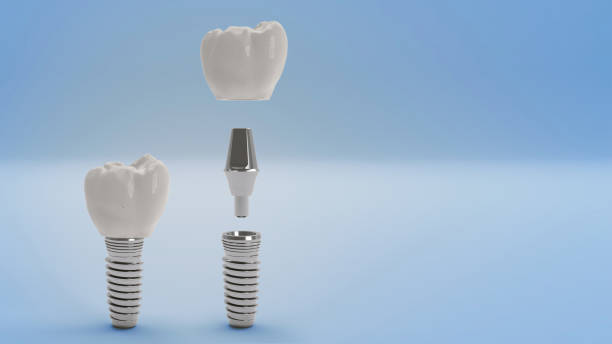
A dental implant crown is the visible replacement tooth attached to an implant. It sits above the gumline and is shaped to look and function like a natural tooth. The completed replacement has three main parts: the implant fixture positioned in the jawbone, an abutment or other connection, and the crown attached on top.
People often call that entire replacement a “dental implant,” but the implant itself is the part beneath the gums. Once the implant has healed, the crown completes the restoration by replacing the portion of the tooth you see when you smile. Unlike a conventional dental crown, which fits over a natural tooth, an implant crown is supported by the implant and its connection.
If you’re exploring implant crowns in Modesto, Dental Design Studio can help you understand how these parts fit together and what the restorative phase of treatment involves.
What Are the Parts of a Completed Dental Implant?
A completed implant-supported tooth has a foundation beneath the gums, a connection, and a visible restoration. Understanding which part does what makes it easier to follow the final steps of treatment—and to describe any concerns to your dentist later.
The Dental Implant Fixture
The implant fixture is positioned in the jawbone at the site of the missing tooth. As it heals, it integrates with the surrounding bone to provide a foundation for the replacement tooth. This is the part dentists mean when they refer specifically to the implant.
The Implant Abutment
The abutment is the component that connects the implant fixture to the crown above the gums. It gives the visible restoration a place to attach and helps position it in relation to the surrounding gum tissue and neighboring teeth.
You may hear your dentist discuss an abutment when it is time to plan the final crown. The precise connection and restorative steps depend on the implant system and the treatment plan, so they may differ from one patient to another. What stays consistent is its purpose: it links the implant in the jawbone to the replacement tooth you can see.
The Implant Crown
The implant crown is the tooth-shaped restoration that completes a single-tooth replacement. Its shape and color are planned to fit your smile, while its chewing surface and contact with neighboring teeth are designed to work with your bite.
Although the crown is the part that looks like a tooth, it is not the implant itself. It is the final restoration supported by the fixture and its connection.
How Is a Dental Crown Attached to an Implant?
The crown is attached after the implant is ready to support a restoration. First, the implant fixture is placed in the jawbone and given time to heal and integrate with the surrounding bone. Your dentist then evaluates the implant and the tissues around it before moving ahead with the replacement tooth. This is the point where treatment shifts from establishing a foundation to creating the tooth that will sit above the gums.
Next, your dentist records the position of the implant and the shape of the surrounding teeth and bite so an implant crown can be made to fit. An abutment or another restorative connection links the finished crown to the implant. Depending on the design, the crown may be secured with a screw or cemented to an abutment. After attachment, your dentist checks how the crown fits beside neighboring teeth, meets the opposing teeth when you bite, and feels when you chew. Adjustments may be made before the restoration is complete.
The exact components and sequence can vary by implant system and treatment plan. In every case, the goal is a secure connection between the healed implant and a crown that fits comfortably and functions as a replacement tooth.
What Is a Screw-Retained Implant Crown?
A screw-retained implant crown is secured through a screw-based connection to the implant or an attached component. The dentist reaches the screw through a small access opening in the crown, then seals that opening with a suitable dental material so it is not left exposed.
One benefit of this design is that a dentist may be able to remove the restoration if it needs inspection, repair, or replacement. That access can make certain maintenance needs easier to address. Whether a screw-retained crown is suitable depends in part on the implant’s position and where the access opening would emerge on the finished tooth.
What Is a Cement-Retained Implant Crown?
A cement-retained implant crown is fitted over an abutment that is connected to the implant, then secured to that abutment with dental cement. In this design, the crown does not need a screw-access opening through its visible or chewing surface. The dentist must also take care to remove excess cement around the restoration.
Screw retention and cement retention are different ways of connecting a crown to an implant; neither is automatically right for every tooth. Your dentist considers the implant’s position, the planned crown’s appearance, your bite, and other clinical details when choosing the restorative design.
How Is an Implant Crown Different From a Regular Dental Crown?
Both restorations are shaped to look and function like teeth. The difference is what supports them: an implant crown replaces a missing tooth, while a crown on a natural tooth covers a tooth that is still present.
| Feature | Implant Crown | Crown on a Natural Tooth |
|---|---|---|
| Foundation | Dental implant positioned in the jawbone | Prepared natural tooth |
| Root | Implant fixture serves as the foundation in place of a tooth root | Natural tooth root remains |
| Connection | Secured through an abutment or other implant connection | Cemented or bonded to the prepared tooth |
| Main Purpose | Replace a missing tooth | Restore an existing damaged tooth |
| Cavities | The crown cannot decay | The natural tooth underneath can develop decay |
This distinction also affects how each restoration is maintained. An implant crown cannot get a cavity, but plaque can still collect around it and inflame the gums. With a crown on a natural tooth, the underlying tooth remains vulnerable to decay, especially near the crown’s edges. In both cases, daily cleaning and dental checkups matter—but an implant crown is not a crown placed over a natural tooth.
When Is the Crown Placed After Dental Implant Surgery?
The final crown is generally placed once the implant has healed enough to support the planned restoration. During healing, the implant integrates with the surrounding jawbone—a process called osseointegration. Before attaching the final tooth, your dentist evaluates the implant’s stability and the condition of the tissues around it.
The timing varies. Healing, implant position, and the overall treatment plan all affect when the final crown can be placed, so an estimate given before surgery may be adjusted as treatment progresses. Once the implant is ready, your dentist can complete the restorative steps: making the crown, attaching it, and checking its fit and bite.
Can a Temporary Tooth Be Used While the Implant Heals?
Sometimes. A temporary replacement tooth may be an option while the implant heals, particularly when the missing tooth is visible when you smile. It may be supported by the implant in some cases or provided through another type of temporary restoration.
The right approach depends on where the implant is placed, how stable it is, how your teeth meet when you bite, and what your treatment plan needs to accomplish. Your dentist can explain whether a temporary tooth is appropriate and what you can expect before the final implant crown is attached.
What Are Dental Implant Crowns Made Of?
Dental implant crowns are commonly made from ceramic materials, including zirconia and porcelain-based restorations. These materials allow the crown to be shaped like a tooth and matched to the surrounding smile. Depending on the design, a crown may be made from one material throughout or use a combination of materials. There is no single material that works best for every implant crown.
Appearance and strength both matter. For a tooth near the front of the mouth, your dentist may pay particular attention to how the crown’s color and light-reflecting qualities compare with neighboring teeth. For a tooth farther back, the crown must also handle the forces of chewing. The location of the implant, your bite, and how the new crown meets the teeth beside and across from it all help guide the choice.
The material is only one part of the final result. Your dentist also plans the crown’s shape, its contact with neighboring teeth, and the way it fits against the surrounding gums. Those details affect how the replacement tooth looks, feels when you bite, and can be cleaned at home. During your implant restoration visit, you can ask which material is recommended for your crown and why it suits that location.
How Is an Implant Crown Designed to Look Like a Natural Tooth?
An implant crown is designed in relation to the teeth around it. Your dentist considers the shape and size of neighboring teeth, then plans the crown’s shade, contours, and position so it fits naturally into your smile. The gumline matters, too: the crown should appear to emerge from the surrounding tissue in a way that suits the rest of your teeth.
A convincing result involves more than matching color. The crown needs to sit properly between adjacent teeth and meet the opposing teeth when you close your mouth. Its chewing surface and the points where it touches neighboring teeth affect how it feels when you bite and how easily you can clean around it. Your dentist checks those relationships when planning the restoration and again when fitting the finished crown.
The priorities can shift with the crown’s location. For a front tooth, small differences in shape, position, or shade may be especially noticeable when you smile or speak. For a back tooth, appearance still matters, but the design must also account for greater chewing forces. In either location, the aim is a replacement tooth planned around your neighboring teeth, bite, and smile.
Can an Implant Crown Be Used for a Front Tooth?
Yes. A dental implant crown can replace a front tooth when the implant site and surrounding tissues are suitable for treatment. Because front teeth are highly visible when you smile and speak, planning the replacement calls for particular attention to how the crown looks beside its neighbors.
Your dentist considers the proposed implant position along with the available bone and gum tissue. Those foundations affect where the crown can sit and how it will appear at the gumline. The crown itself is then designed with the neighboring teeth in mind: its width, length, contours, and shade should suit your smile rather than look like a stand-alone tooth. Even a carefully color-matched crown can look out of place if its shape or position does not fit the surrounding teeth.
Front-tooth treatment therefore involves planning both the implant and the visible restoration. An evaluation can show whether the site offers the support needed and help you understand what may be involved in creating a result that looks natural and functions comfortably.
What Happens If an Implant Crown Becomes Loose or Damaged?
A loose or damaged implant crown needs attention, but it does not automatically mean the implant in the jawbone has failed. An implant-supported tooth has several connected parts, and the problem could involve the crown, its retaining screw, the abutment, the way the crown meets your bite, or the implant itself. Those possibilities can feel similar to a patient, so the first step is to have a dentist identify which component is affected.
For example, a crown that shifts when you chew may need a different repair from one that has chipped but remains secure. Continuing to chew on a loose or damaged restoration may put unwanted pressure on its components. Contact your dentist for an evaluation rather than trying to tighten, glue, or adjust it yourself.
Can an Implant Crown Be Replaced Without Replacing the Implant?
Sometimes, yes. If the implant fixture remains healthy and stable, your dentist may be able to repair or replace the crown or another restorative component while leaving the implant in place. This is one reason it helps to distinguish the visible replacement tooth from the fixture that supports it.
The options depend on what has happened to the restoration and the condition of the surrounding tissues and implant. Your dentist may examine the crown and its connection, assess the bite, and check the implant before recommending a repair or a new restoration. A damaged crown does not always require implant replacement, but an examination is needed to know what can safely be kept.
What Are Signs an Implant Crown Should Be Checked?
Schedule an emergency dental appointment if the crown feels loose or moves, has chipped or fractured, or feels different when you bite. Discomfort while chewing, new food trapping around the replacement tooth, or changes in the gumline are also worth checking. Even a small change can help your dentist identify a problem before it becomes more disruptive.
These signs do not tell you on their own whether the crown, abutment, screw, bite, or implant is responsible. A dentist can check the individual parts and explain what the finding means for your restoration.
Can a Dental Implant Crown Get a Cavity?
No. An implant crown cannot develop a cavity like a natural tooth. It is made from restorative material and is supported by an implant, rather than by a natural tooth that can decay underneath. That is one important difference between an implant crown and a crown placed over an existing tooth.
The absence of cavities does not make the area maintenance-free. Plaque can collect where the crown meets the gums and in spaces between the replacement tooth and its neighbors. If plaque is allowed to build up, the gum tissue around the implant can become inflamed. Problems affecting the tissues that support an implant may develop even when the crown itself looks and feels intact.
Clean around your implant crown every day using the method your dental team recommends, and keep your professional maintenance visits. Those appointments let your dentist check the crown and the gums and bone supporting the implant. Caring for both parts helps protect the completed tooth replacement over time.
How Do You Clean and Maintain an Implant Crown?
Clean an implant crown as part of your daily oral-care routine. Brush the crown and pay attention to the area where it meets the gumline, where plaque can collect. Clean between the implant crown and neighboring teeth as well. Depending on the crown’s shape and the space around it, your dental team may recommend floss, an interdental brush, a water flosser, or another way to reach those surfaces. Ask them to show you what works for your particular restoration, especially if floss catches or an area is difficult to reach.
Professional visits look at two sides of implant health. The first is the restoration: your dentist can check the crown for wear or damage, assess its connection to the abutment, and see how it meets your other teeth when you bite. If something feels loose or your bite changes, mention it rather than waiting for your next routine visit.
The second is the health of the tissues supporting the implant. Your dental team can check the surrounding gums for plaque, bleeding, or inflammation and monitor the supporting bone when indicated. An implant crown may look fine while the tissue around it needs attention, just as healthy-looking gums do not rule out a problem with the crown or its connection. Daily cleaning and regular professional maintenance give both parts of your tooth replacement the care they need.
How Long Does a Dental Implant Crown Last?
There is no single lifespan that applies to every implant crown. The crown is the part that takes on daily chewing forces, so it can wear, chip, fracture, or need an adjustment or replacement over time. Its condition depends on factors such as its material, where it sits in the mouth, your bite, and how the restoration is cared for and maintained.
It also helps to separate the crown from the implant fixture. The fixture is positioned in the jawbone; the crown is the visible restorative component attached to it. They do different jobs and should not be expected to have identical lifespans. If a crown needs replacement, that does not necessarily mean the implant beneath it needs replacement too. Your dentist would need to evaluate the fixture, its connection, and the surrounding tissues before determining what work is needed.
At regular visits, your dental team can check the crown for wear or damage and see whether your bite is putting pressure on it in an unexpected way. If you notice a chip, a change in how your teeth meet, or any movement, schedule a check rather than assuming it is ordinary wear.
Does Replacing an Implant Crown Cost the Same as Replacing the Entire Implant?
Usually, these are different types of treatment, so they should not be assumed to have the same cost. An implant crown is the visible restoration; the implant fixture is the foundation in the jawbone. If the fixture remains healthy and stable, repairing or replacing the crown may involve work only on the restorative components. If the implant itself or the tissues supporting it need treatment, the plan can be more involved.
The cost of dental implant restoration depends on what your dentist finds. A chipped crown may call for a different solution from a loose abutment, a damaged connection, or an implant that has lost support. The type of restoration, materials selected, laboratory work, and complexity of the repair can all affect the estimate. An evaluation is needed before anyone can say which components need attention.
When comparing dental implants cost or asking about the cost of dental implants, make sure you know which parts a quote covers. An estimate for a new implant, abutment, and crown is not the same as an estimate to replace a crown on an existing, stable implant. Your dentist can explain what the examination shows, which parts of the restoration can be kept, and the cost of the recommended work.
Where Can You Get an Implant Crown or Dental Implant Restoration in Modesto?
At Dental Design Studio in Modesto, CA, an implant evaluation can help you understand the next restorative step, whether you have an implant that has finished healing or an existing implant crown that needs attention. The dentist can assess the implant site and plan a crown that fits your neighboring teeth and bite.
If you already have a restoration that feels loose, looks damaged, or no longer fits comfortably, bring that concern to your appointment. An examination can help determine whether the issue involves the crown, abutment, another connecting component, or the implant itself. From there, the team can explain whether repair, a replacement crown, or a different type of treatment is appropriate.
Frequently Asked Questions About Implant Crowns
Is the crown the same thing as the dental implant?
No. The implant fixture is positioned in the jawbone and serves as the foundation. An abutment or other restorative connection links that fixture to the crown, which is the visible replacement tooth. People often call all three parts a “dental implant,” but knowing which part you mean is useful when discussing repairs or replacement.
How does a crown stay attached to a dental implant?
An implant crown is connected to the fixture through an abutment or another restorative component. Some crowns are held with a screw-based connection; others are cemented to an abutment attached to the implant. Your dentist chooses the design based on factors such as implant position, the planned crown, appearance, and your bite.
Can an implant crown come loose?
Yes. A crown or one of its connecting components can loosen even if the implant fixture remains stable. If the replacement tooth moves, clicks, or feels different when you chew, arrange an evaluation. A dentist can determine which part has loosened and what needs to be repaired; movement alone does not establish that the implant has failed.
Can a dental implant crown be replaced?
Often, an implant crown can be replaced if the underlying implant remains healthy and stable. Whether that is the right solution depends on the crown, its connection, and the tissues around the implant. Your dentist will examine those parts before recommending a new crown or another treatment.
Can an implant crown get a cavity?
No. The crown is made from restorative material, so it cannot develop tooth decay. Plaque can still collect around it, however, and the gums and bone supporting the implant can develop inflammation. Daily cleaning and professional maintenance matter even when the visible crown has no damage.
Does replacing an implant crown require surgery?
Replacing the crown itself generally does not involve implant surgery. The dentist first needs to identify what has caused the problem. If the implant fixture is healthy and stable, treatment may be limited to the crown or its connecting components. If the fixture or surrounding tissues also need treatment, the plan may be different.
Does an implant crown look like a real tooth?
An implant crown is designed to resemble a natural tooth. Your dentist considers its shape, size, shade, and contours in relation to neighboring teeth and the gumline. The crown also needs to fit your bite, so the final design balances how the replacement looks with how it functions when you chew.
Ready to Complete or Restore Your Smile With a Dental Implant?
The implant in your jaw is the foundation; the crown is the replacement tooth you see and use to chew. How that crown fits, connects to the implant, meets your bite, and is maintained all matter to the completed restoration.
If you’re considering an implant in Modesto or have an existing implant crown that needs attention, schedule an evaluation at Dental Design Studio. We can assess what’s in place, discuss your goals, and help you understand the appropriate next step.
